Heat, humidity, flat grades, and sandy soil make Charleston patios a different animal. Here is what actually keeps a paver patio flat and crack-free for decades in the Lowcountry.
A patio in Charleston lives a harder life than a patio almost anywhere else. Summer sun bakes the surface past 130°F. Afternoon thunderstorms dump inches of rain in an hour. The soil beneath it is sandy one block and clay the next. And the water table sits high enough that anything buried shallow wants to heave.
So when a paver patio fails here — when it dips, cracks, or grows a weed farm in the joints — it almost never fails because of the pavers themselves. It fails because of what is underneath them. Here is how we build a patio that stays flat through Lowcountry summers for decades, not seasons.
It starts below the surface
The pavers you walk on are the last 5% of the job. The other 95% is excavation, base, and drainage. We excavate to the right depth for the load the patio will carry — deeper for a driveway or an outdoor kitchen, shallower for a walkway. Then we install and compact a crushed-stone base in lifts, compacting each layer before adding the next.
Compaction is the part most contractors shortcut. A base that looks flat but is not compacted will settle under the first heavy rain — and in the Lowcountry, the first heavy rain comes quickly. We compact to the same spec used on commercial paver projects, because the physics do not care that it is a backyard.
Drainage is not optional
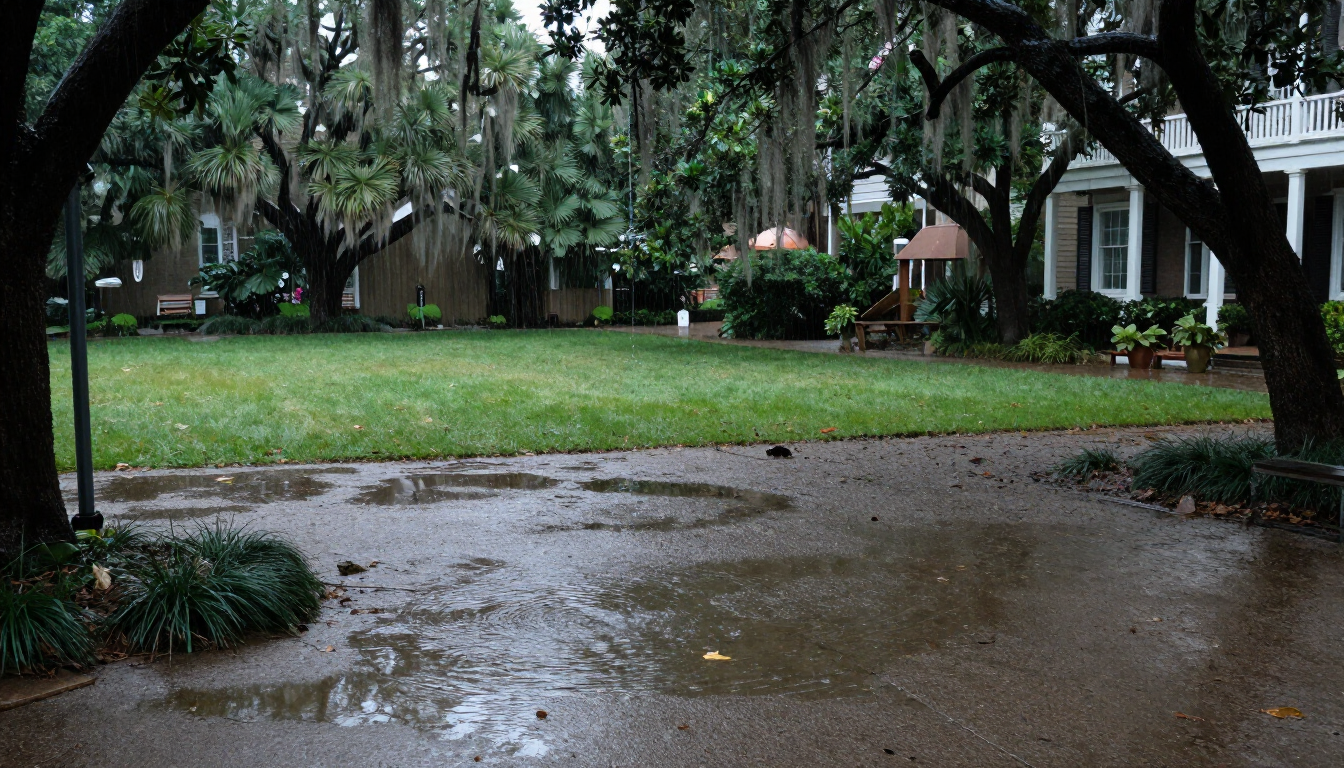
Flat grades and high water tables mean water has nowhere to go on its own. If your patio does not shed water, it will hold it — and standing water destroys paver joints, breeds mosquitoes, and turns a beautiful space into one you avoid.
- Grade the patio surface at a slight pitch so water sheets off, not pools
- Direct runoff away from the home foundation and into a planned exit path
- Tie downspouts into drainage so roof water does not dump onto the pavers
- Use polymeric sand in the joints so it locks hard and resists washout
Choose the right material for the look and the use
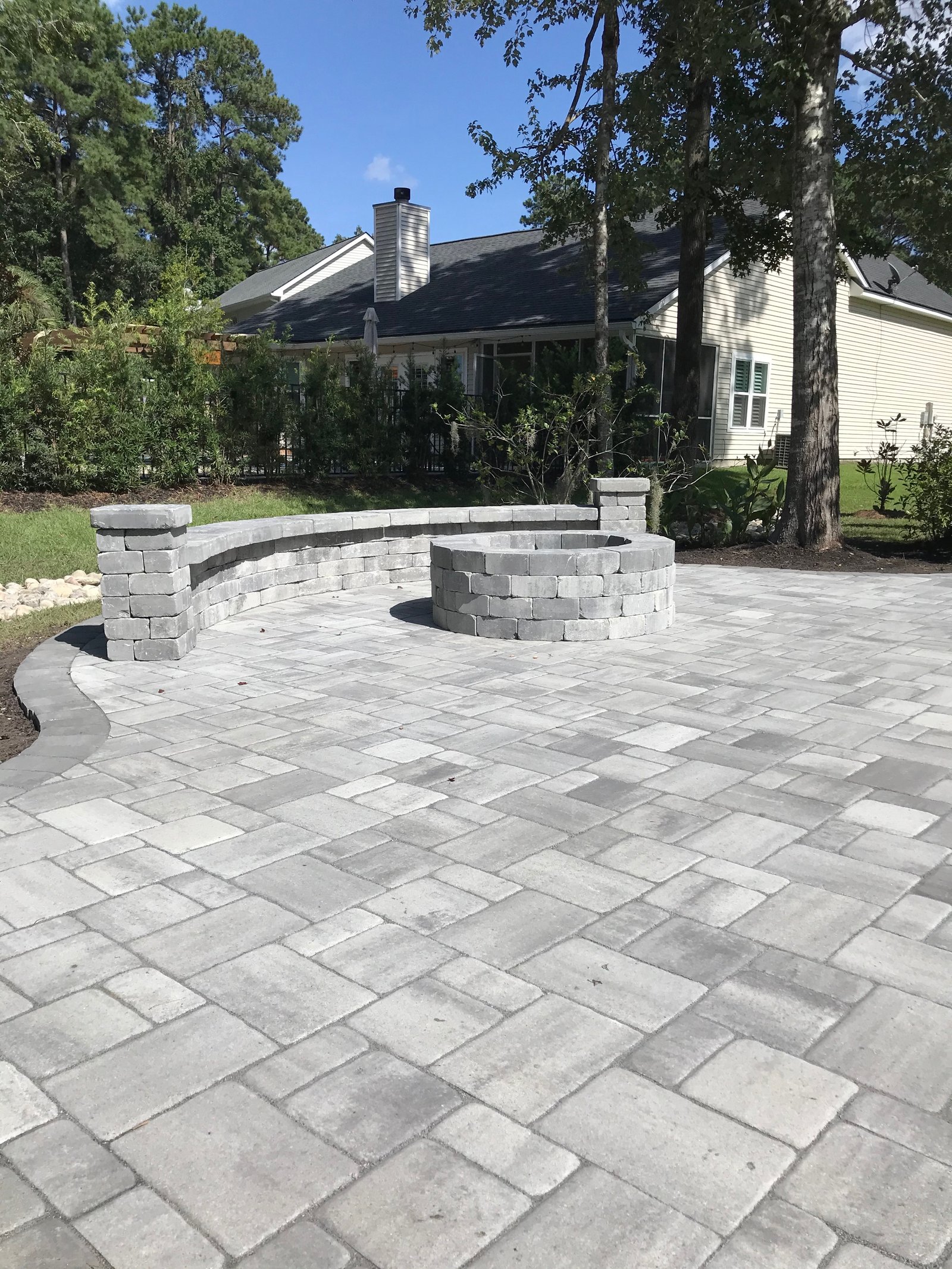
Travertine stays cooler underfoot than concrete pavers — a real advantage when the surface is hot enough to burn bare feet. Natural flagstone gives a more organic, irregular look. Concrete pavers offer the widest range of colors and patterns, from running bond to herringbone to custom inlays. None is universally "best"; the right choice depends on how you use the space and the look you want.
The edge restraint is what keeps it together
Pavers are held in place by friction and by the edge restraint around the perimeter. Skip a proper edge restraint — or install it shallow — and the outside row migrates outward over time, opening joints and ruining the pattern. We install a rigid plastic or concrete edge restraint spiked into the compacted base, hidden underground where you never see it.
The result is a patio that looks better every year instead of worse. No dips, no weeds, no pooled water — just a flat, beautiful stage for everything else you want to do outdoors. If you are planning a patio in Charleston, Mount Pleasant, Summerville, or anywhere in the Lowcountry, we will walk your property and send an itemized estimate with no pressure.