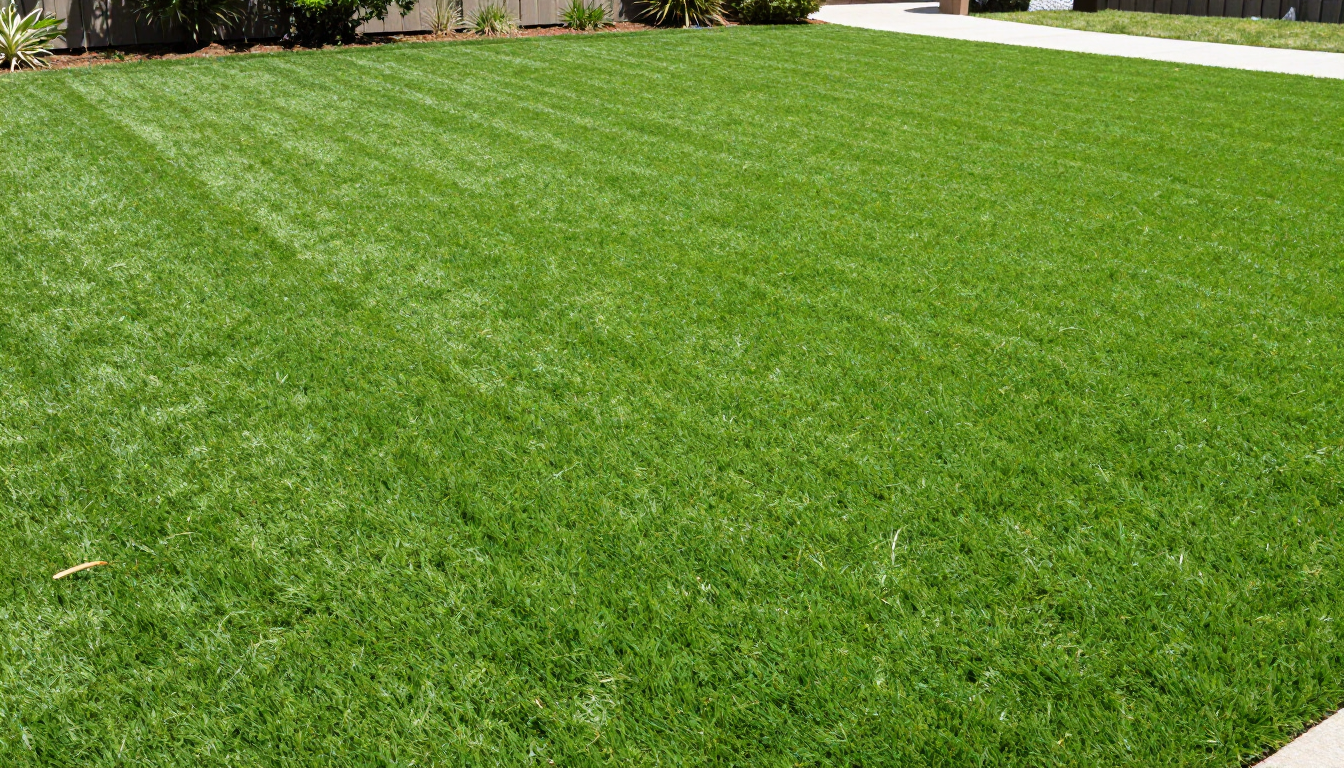
Real grass in the Lowcountry is a constant fight against heat, shade, and drainage. Here is an honest comparison to help you decide whether synthetic turf is right for your yard.
Let us be honest up front: we install both, and we are certified turf installers. So this is not a sales pitch for turf. It is an honest look at where synthetic turf makes sense in a Lowcountry yard, where natural grass still wins, and how to choose.
Where natural grass struggles in the Lowcountry
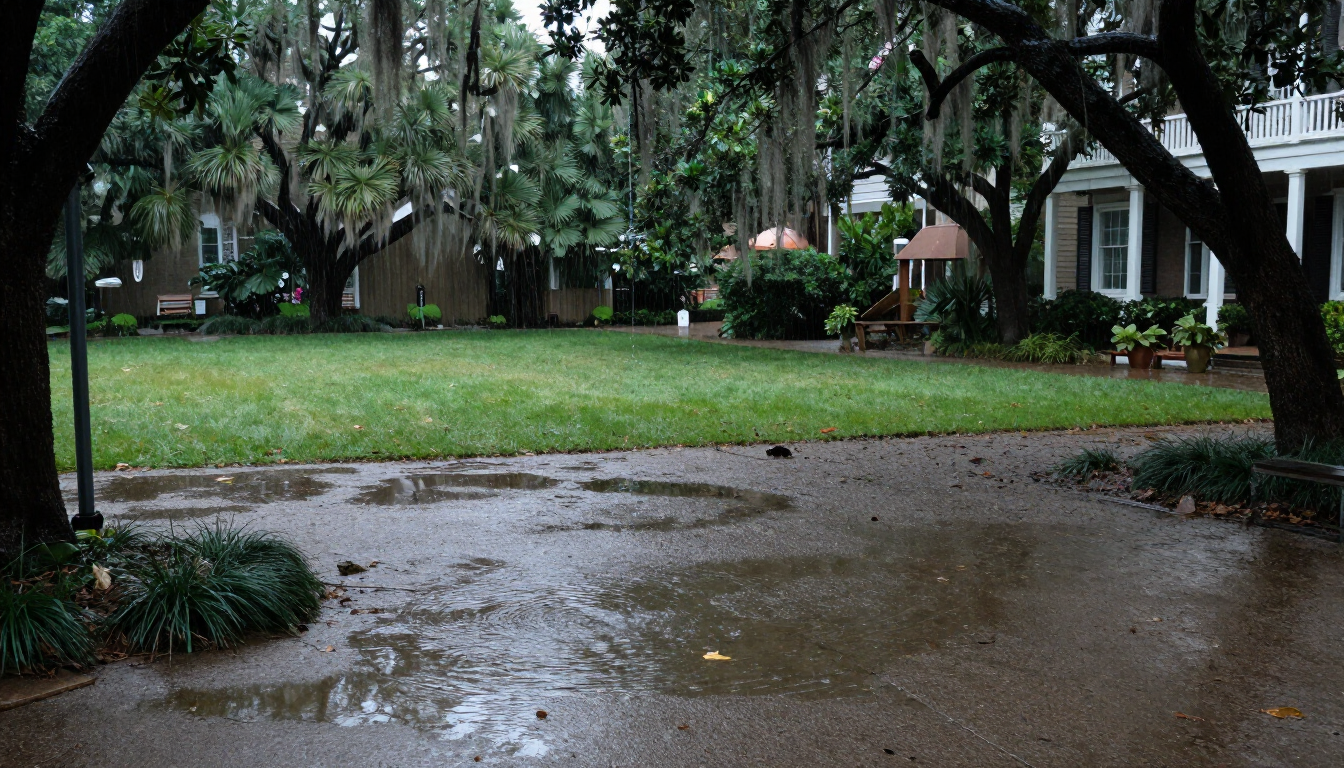
St. Augustine and other warm-season grasses can do well here, but they fight three enemies constantly: intense summer heat that browns shaded areas, tree canopy that starves patches of sunlight, and poor drainage that drowns the roots after storms. The result is the patchy, half-dead lawn a lot of Charleston homeowners know too well — green in spots, brown in others, and a weekly mowing and watering commitment just to hold the line.
Where artificial turf shines
- Shaded side yards where grass simply will not grow
- High-traffic play areas and pet runs that get torn up
- Small front yards or strips where a mower is overkill
- Pool surrounds where you want green without the clippings and mud
- Any spot where water use or maintenance is the priority
Modern turf is not the plastic carpet of twenty years ago. Good turf has a realistic blade shape, a thatch layer for softness, and a color that reads as a healthy lawn, not a putting green. Installed correctly, most neighbors cannot tell from the street.
Why installation matters more than the turf itself
The number one reason turf fails is not the product — it is the base. Roll turf out over soft ground and it will wrinkle, hold water, and feel spongy. We build the system underneath: a compacted aggregate base, a drainage layer, and the right infill so the turf drains fast, stands upright, and feels firm underfoot.
- Compacted aggregate base — the turf sits on a solid, graded surface, not soft dirt
- Drainage layer — water passes through the backing and away, never puddling on top
- Infill — brushed in to weigh the turf down, keep blades standing, and add cushion
- Invisible seams and secured edges — so it looks like one continuous lawn
The honest tradeoffs
Turf is a bigger upfront investment than sod, but it pays back in zero mowing, zero watering, and zero brown patches — for 15 years or more. It does get warm in direct midday sun (a quick rinse cools it). And it is not "maintenance-free" forever — occasional brushing and topping up infill keeps it looking new. For the right spot in the right yard, it is one of the best upgrades you can make.
Not sure if turf makes sense for your yard? We will look at the space, the sun, and how you use it, and give you an honest recommendation — even if that recommendation is natural grass.